By Karen S. Faber, REALTOR® — Faber + DoVale Team, Harry Norman, REALTORS®
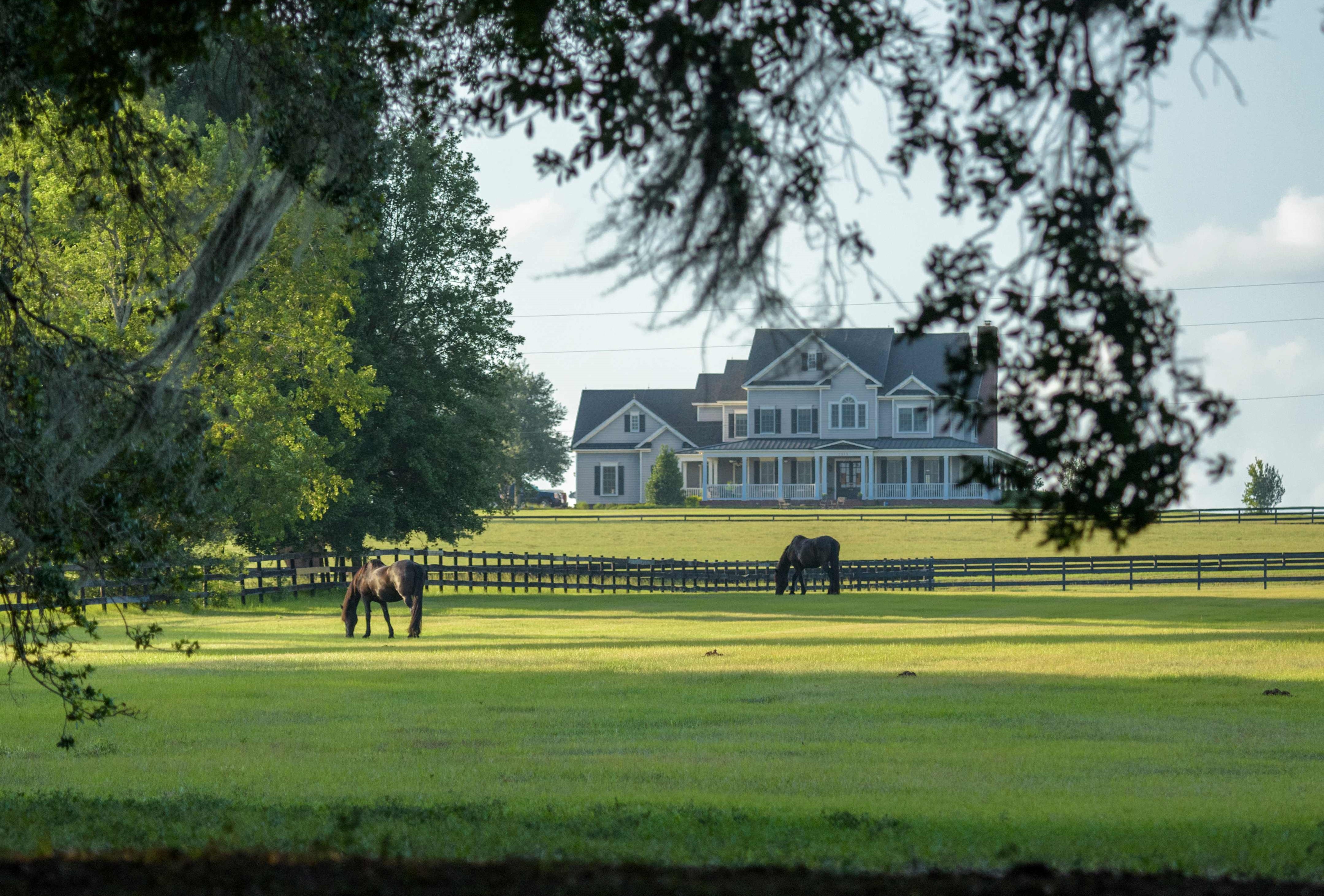
Milton, Georgia occupies a distinct niche in the North Atlanta market. Incorporated in 2006 specifically to preserve its rural and equestrian character, the city has maintained some of the largest minimum lot sizes in the metro area — a deliberate planning choice that continues to shape what’s available to buyers today.
Why Milton Looks Different from Its Neighbors
Much of Milton sits within what the city designates as its Agricultural, Forestry, and Equestrian (AEO) overlay district, which sets minimum lot sizes well above what you’ll find in adjacent Alpharetta or Roswell. The practical result: wider setbacks, mature tree canopy, pastureland, and — in many neighborhoods — the physical space for a barn, riding ring, or paddock in addition to the primary residence.
This isn’t just zoning trivia. It’s the reason Milton attracts a specific type of buyer: someone who wants land, privacy, and often equestrian infrastructure, without giving up proximity to Alpharetta’s retail corridor, GA-400 access, or the broader North Atlanta job market.
What “Equestrian Estate” Actually Means Here
The term covers a range of properties, from working horse farms with multiple stalls and full arenas to smaller estates with a two- or three-stall barn suited to personal use rather than boarding or training. Buyers new to the category should budget time to understand:
- Fencing and pasture condition — board fencing requires ongoing maintenance, and pasture quality affects both usability and resale.
- Barn infrastructure — stall count, wash racks, tack rooms, and hay storage vary widely and materially affect value.
- Ring and arena footing — a covered or all-weather arena is a meaningful upgrade over an open ring.
- Water rights and well capacity, in properties not on county water, since equestrian use increases demand.
A CMA (Comparative Price Analysis) on an equestrian property should account for these features separately from square footage, since comparable sales in this niche are thinner than standard residential comps.
Beyond the Barn: The Broader Appeal
Not every large-lot buyer in Milton owns horses. Many are drawn simply to the acreage, the privacy, and the slower pace relative to more built-out parts of North Fulton — while still being a short drive from Avalon, downtown Alpharetta, and GA-400. Milton’s tree ordinance and lower-density development pattern also mean the visual character of a neighborhood tends to stay more consistent over time than in areas with more infill construction. See other homes for sale in Milton.
What to Expect on Price and Inventory
Because large-lot and equestrian properties are inherently lower-density, inventory in Milton moves in smaller numbers than in higher-density submarkets — fewer listings, but each one is more distinct from the next. That makes working with an agent who understands how to value acreage, outbuildings, and equestrian infrastructure particularly important; a standard per-square-foot comparison can significantly under- or overvalue these properties. Learn more with the Milton market forecast.
*** Milton Market Report - Prices, For Sale, Pending & Sold ***
Is Milton Right for You?
If land, privacy, and the option for equestrian or agricultural use matter to your next move, Milton is worth serious consideration. If you’re unsure whether a specific property’s zoning supports your plans — boarding horses, adding outbuildings, or subdividing acreage — that’s worth confirming with the City of Milton’s planning department before you write an offer.
Curious what’s currently available in Milton’s equestrian and large-lot market? Reach out to the Faber + DoVale Team — we’d be glad to walk you through current inventory and what to look for.
Search Equestrian Properties!
Karen S. Faber is a top-producing REALTOR® with the Faber + DoVale Team at Harry Norman, REALTORS®, specializing in Roswell, Alpharetta, Marietta/East Cobb, Woodstock, Sandy Springs, Milton, and Johns Creek.