



This is one of the most common objections REALTORs encounter, and the good news is there are several compelling, data-driven arguments that can help a buyer understand why waiting for rates to drop may not be the sound financial strategy they think it is. Here is a comprehensive case...
"Marry the Home, Date the Rate"
The single most powerful and memorable concept for a hesitant buyer is this simple phrase that has become a cornerstone of real estate counseling in a higher-rate environment.
The idea is straightforward — the home you buy is a long-term commitment that should be based on your lifestyle needs, family situation, and the right property at the right time, while the interest rate is a temporary condition that can be addressed through refinancing when rates eventually improve. Locking yourself out of the market while waiting for the perfect rate means potentially missing the perfect home.
Home Prices Will Likely Rise While You Wait
This is perhaps the most financially compelling argument against waiting. When interest rates do eventually drop — and history tells us they will — a significant wave of buyers who have been sitting on the sidelines will flood back into the market simultaneously, creating a surge in demand against a still-constrained housing supply.
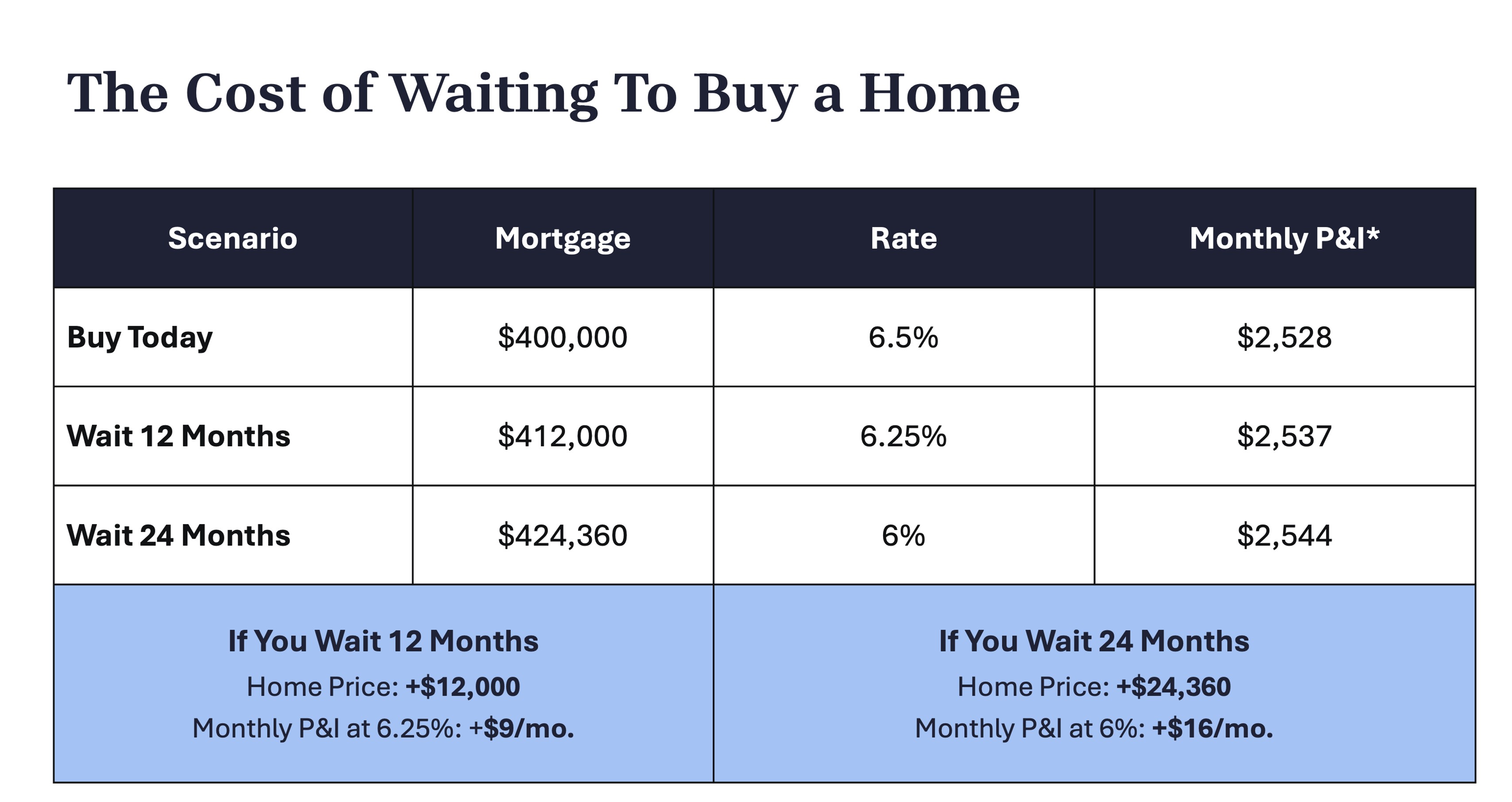
Basic economics dictates that this increased competition will drive home prices upward, potentially significantly. A buyer who waits for a 1% rate reduction may find that the home they could have purchased for $400,000 today now costs $430,000 or $450,000 — and the math often works out that the higher purchase price more than offsets the savings from the lower rate. The rate went down but the price went up, and they are now borrowing more money even at the better rate.
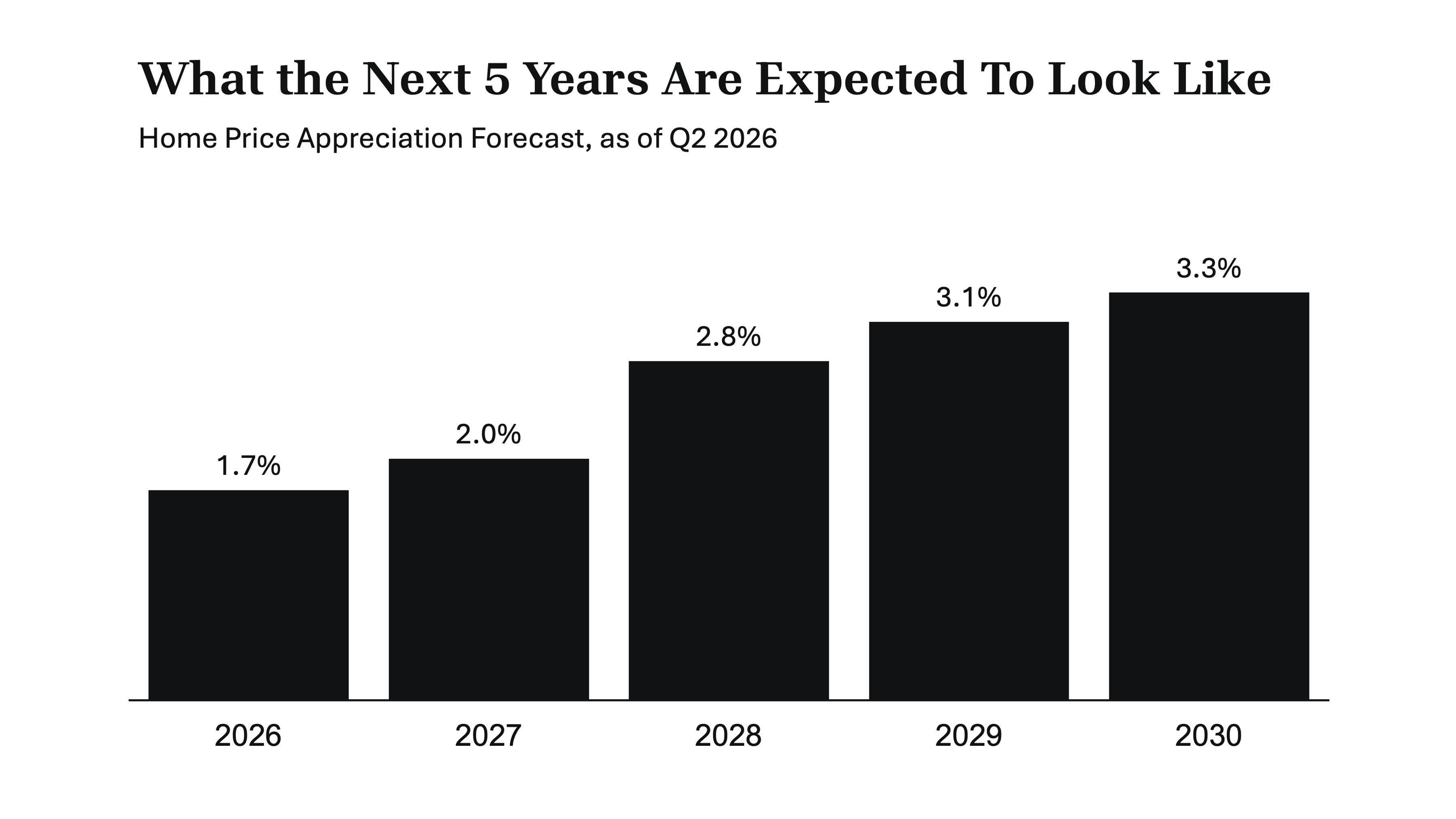
They Are Building Equity Every Month They Own
Every month a buyer delays their purchase is a month they are not building equity in a home of their own.
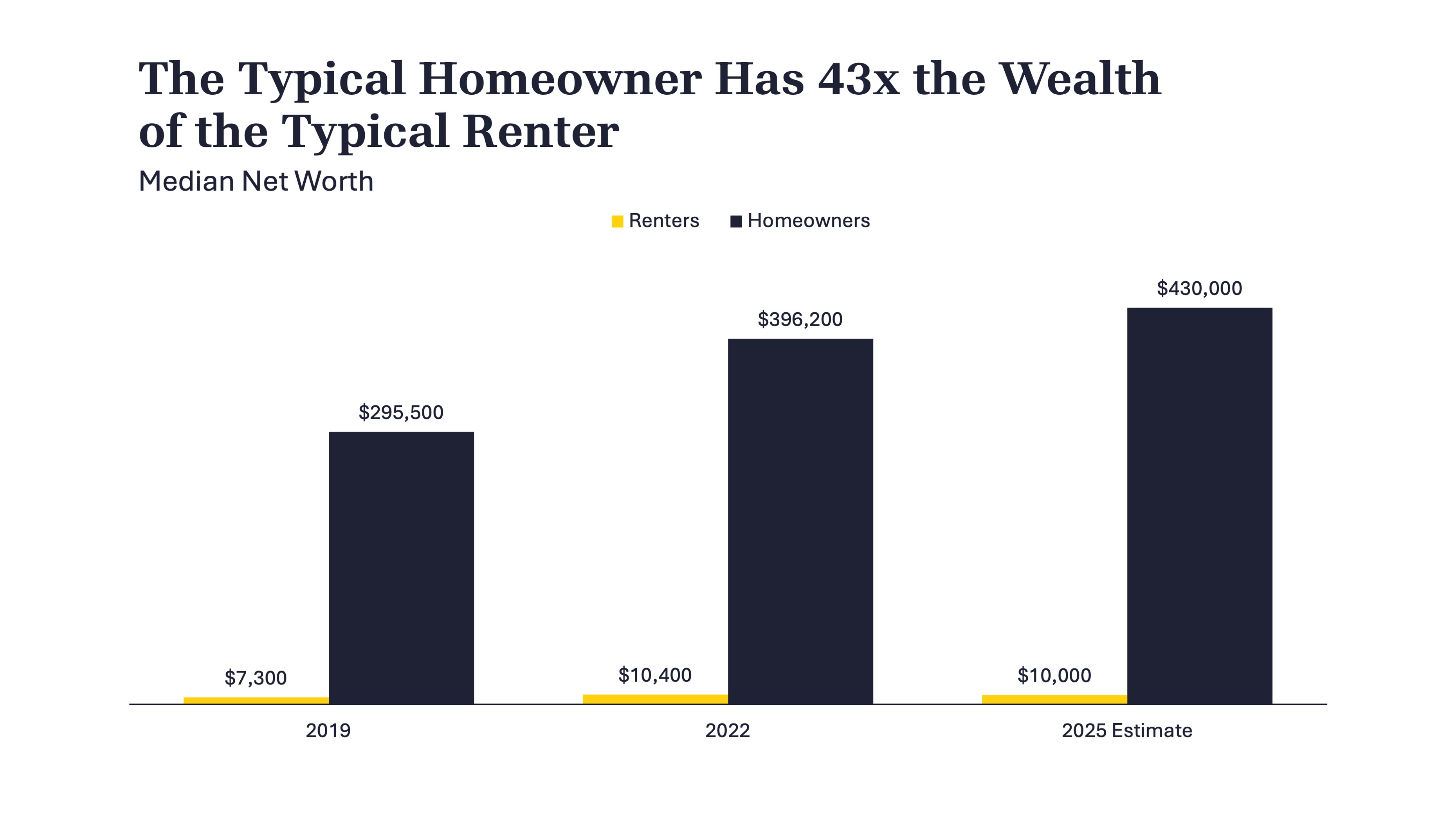
Whether you are renting or living with family, that monthly housing cost is going out the door with zero return — it is pure expense with no asset accumulation. From the day you close on a home, every mortgage payment they make builds ownership stake in an appreciating asset, and every month of appreciation adds to your net worth in a way that renting never can.
The opportunity cost of waiting — measured in lost equity accumulation and missed appreciation — is a very real financial consequence that rarely gets factored into the "wait for rates" calculation.
You Can Refinance — You Cannot Buy Yesterday's Price
One of the most important points to drive home is that interest rates are refinanceable but purchase prices are not. If you purchase today at a higher rate and rates drop meaningfully in the next two to three years — which many economists anticipate — you can refinance into the lower rate and enjoy the best of both worlds: you locked in today's purchase price and captured tomorrow's rate even if you have to buy before you sell your current home. However, if you wait and prices rise in the interim, you cannot go back and buy the home at the price it was available for today.
The purchase price is permanent; the interest rate is not.
The Monthly Payment Difference May Be Smaller Than You Think
Many buyers are psychologically anchored to the historically low rates of 2020 and 2021 — rates that were anomalous by any historical measure and are unlikely to return to those levels in the foreseeable future. It is worth doing the actual math with your buyer to show what a realistic rate reduction — say from 7% to 6% or 6.5% — actually means in terms of monthly payment on their target price point.
On a $350,000 loan, the difference between a 7% and a 6% rate is approximately $210 per month — meaningful, but perhaps not worth sitting out of the market for one, two, or three years while paying rent and missing appreciation. When buyers see the actual numbers rather than reacting emotionally to the rate environment, their perspective often shifts considerably.
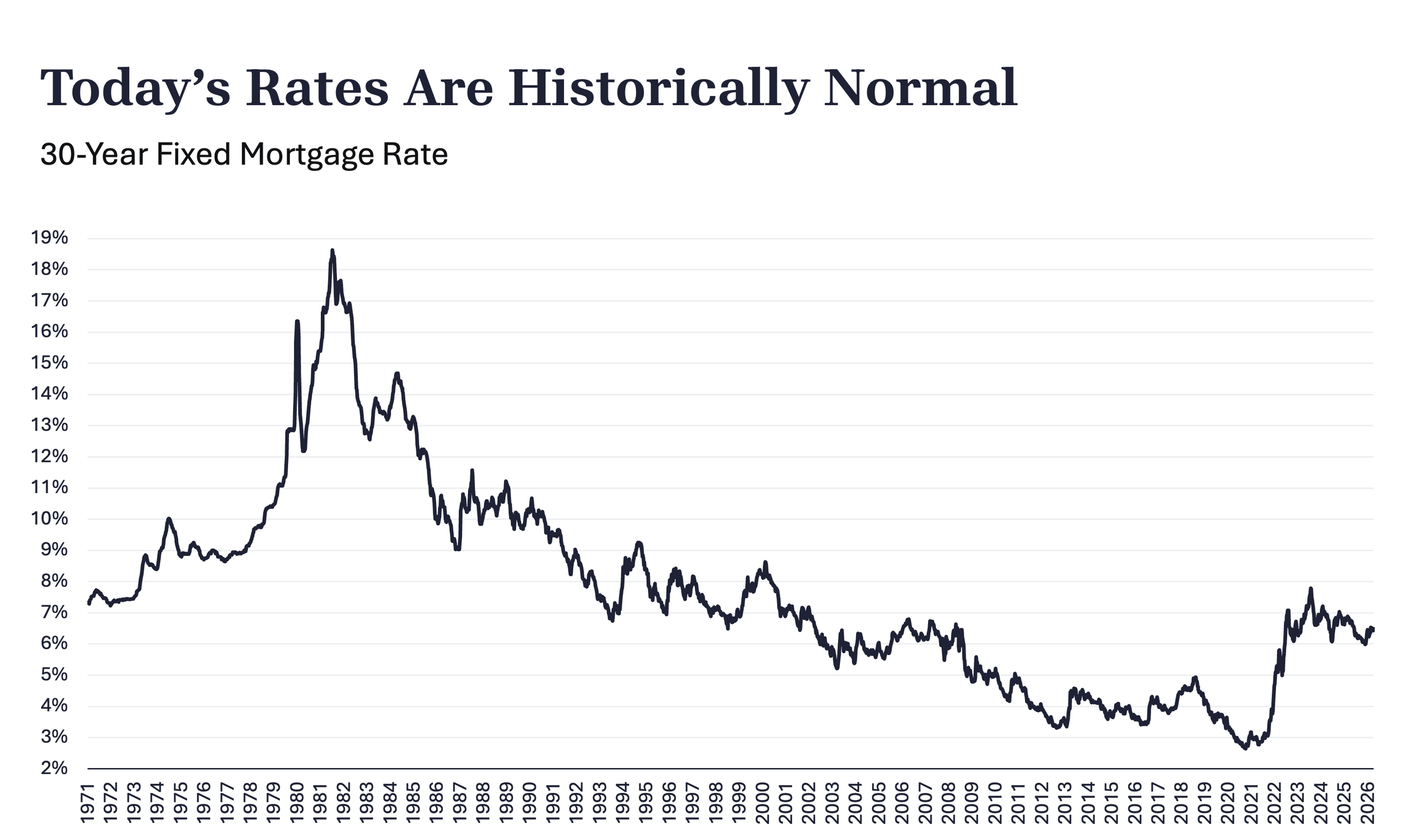
Historical Context — Rates Are Not as Extreme as They Feel
Buyers who came of age during the post-2008 era of historically suppressed interest rates have a distorted baseline for what a "normal" mortgage rate looks like. It is worth reminding that the 30-year fixed mortgage rate averaged around 8% throughout the 1990s — a decade of robust homeownership and strong appreciation — and peaked above 18% in the early 1980s.
The buyers of those eras did not have the luxury of waiting for 3% rates because those rates did not exist, and yet they bought homes, built equity, and accumulated generational wealth through homeownership. Putting today's rate environment in its proper historical context helps buyers recalibrate their expectations and recognize that current rates, while higher than the recent anomalous lows, are not historically extreme.
Renting Is Not "Saving Money" — It Is Paying Someone Else's Mortgage
A buyer who delays purchasing and continues renting is not avoiding housing costs — they are simply paying them to someone else with no financial return. In most markets, a landlord is charging rent that covers or exceeds their own mortgage payment, meaning the renter is effectively financing their landlord's equity accumulation while building none of their own.
Additionally, rent is not static — it increases over time, often dramatically in supply-constrained markets — while a fixed-rate mortgage payment remains constant for the life of the loan, providing a hedge against housing cost inflation that renting simply cannot offer.
Tax Benefits Begin the Day They Close
Homeownership comes with meaningful tax advantages that renters do not enjoy, including the potential deductibility of mortgage interest and property taxes, the capital gains exclusion on profits from the eventual sale of a primary residence (up to $250,000 for single filers and $500,000 for married couples filing jointly), and various energy efficiency credits for qualifying home improvements. Every month spent waiting is another month these tax benefits are unavailable.
The Bottom Line
The most honest and effective closing argument is this — no one can time the market perfectly, and trying to do so almost always costs more than it saves. The buyers who consistently build wealth through real estate are not the ones who waited for perfect conditions — they are the ones who bought when they were financially ready, in a home that met their needs, and held on through the inevitable cycles of the market.
******
The best time to buy a home is when you are financially prepared, emotionally ready, and have found the right property — and that time is almost never "later."

:format(webp):quality(80)/u.realgeeks.media/northatlanta-homes/National-Housing-Outlook-2026_vFNL_Page_01.jpg)
:format(webp):quality(80)/u.realgeeks.media/northatlanta-homes/HSoA-2026-National-Housing-Outlook_Page_01.jpg)