Due Diligence in Georgia Real Estate: What It Involves and How Long It Takes
This article is general information and is provided as a general guideline, not legal advice. Contract terms vary; consult a Georgia real estate attorney and or your REALTOR® about your specific transaction.
In a Georgia home purchase, due diligence is the window after the contract is signed when the buyer investigates the property and can still walk away. Georgia largely follows "buyer beware," so this is when buyers learn what they are actually buying, not after closing.
Most residential sales here use the Georgia REALTORS® Purchase and Sale Agreement (form F201). It sets a negotiated Due Diligence Period during which the buyer may terminate for any reason by giving written notice before the deadline and, under the standard form, recover earnest money.
Once that deadline passes, the buyer's exit options narrow to specific contingencies, such as financing or appraisal, if the contract includes them.
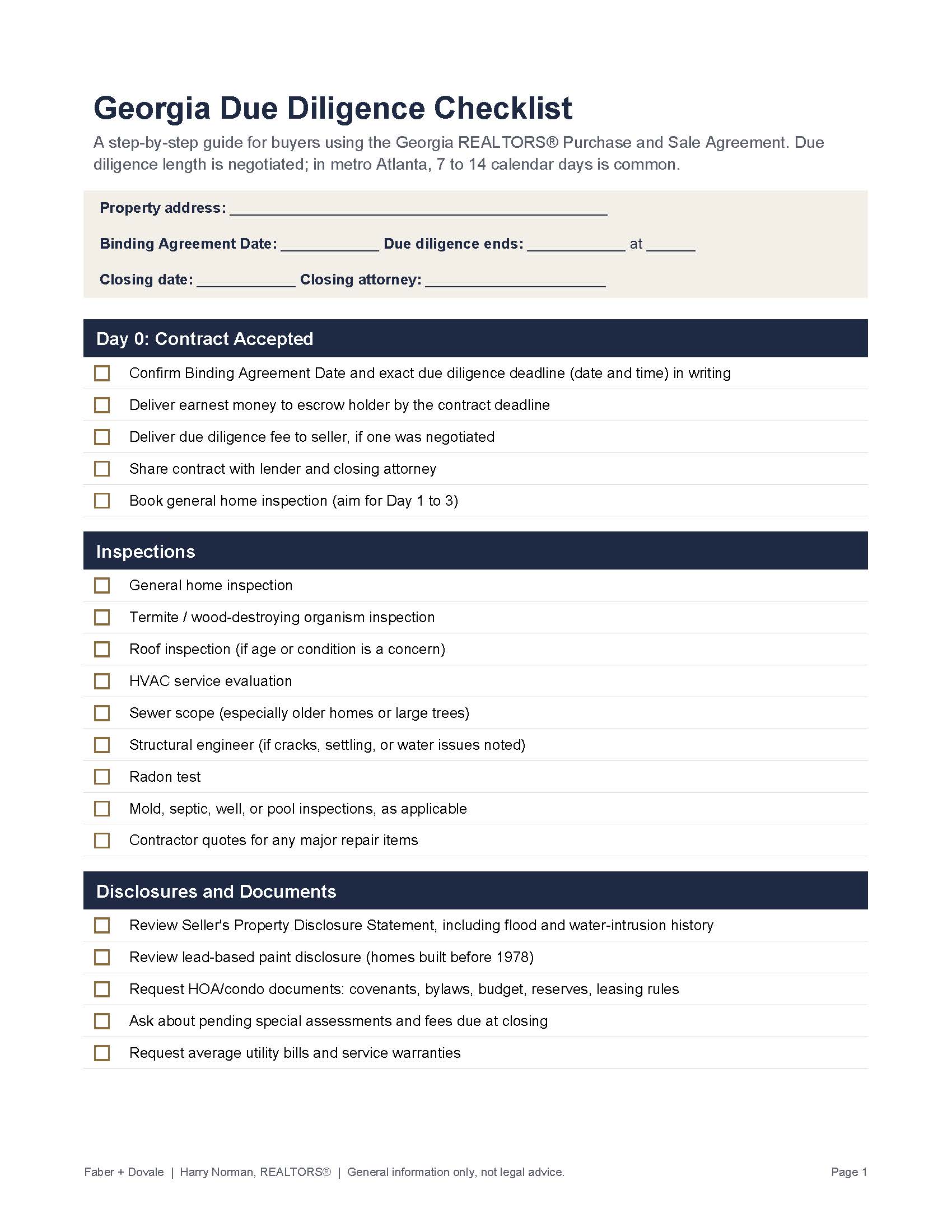
DOWNLOAD your FREE Due Diligence Checklist
How long does due diligence take?
Georgia law sets no required length. The number of days is whatever buyer and seller agree to in the contract, counted in calendar days with the Binding Agreement Date as day zero.
In metro Atlanta, periods of roughly 7 to 14 days are common. Buyers competing in multiple-offer situations sometimes offer shorter windows, while larger, older, or more complex homes often justify longer ones so specialists can be scheduled. Due diligence usually ends well before closing, which typically falls 30 to 45 days after contract on a financed purchase.
A shorter period is a trade-off, not a free advantage: every day removed is one less day to find, price, and negotiate a problem.
What due diligence involves
Due diligence covers far more than a home inspection. A thorough review typically includes:
• Inspections. A general home inspection first, then specialists as needed: termite (wood-destroying organism), roof, HVAC, sewer scope, structural engineer, radon, mold, septic, or pool.
• Seller disclosures. The seller's property disclosure statement, including any flood or water-intrusion history, plus the federal lead-based paint disclosure for homes built before 1978.
• Title. The closing attorney's title search should surface liens, easements, and restrictions. The standard contract requires only marketable or insurable title, so buyers with specific plans for the property should raise concerns early.
• Survey and boundaries. Lot lines, encroachments, and easements, which matter most if you plan a fence, pool, or addition.
• HOA or condo documents. Covenants, bylaws, budget, reserves, leasing restrictions, pending special assessments, and fees due at closing.
• Insurance and flood risk. Homeowners insurance quotes and the FEMA flood map; flood zone status can affect lender requirements and cost.
• Financing. Loan application, documentation, and appraisal ordered promptly. Some Georgia closing attorneys advise settling financing questions inside due diligence rather than relying on a financing contingency alone.
• Use and permits. Zoning and permit history for past renovations, confirmed with the local jurisdiction.
• Ongoing costs. Average utility bills and current property taxes, keeping in mind that taxes can change after a sale.
Due diligence fee vs. earnest money
These are two different payments. Earnest money is held in escrow and credited to the buyer at closing; under the standard form, it is returned if the buyer terminates properly within the due diligence period.
A due diligence fee, when one is negotiated, is paid to the seller for taking the home off the market and is typically nonrefundable. Not every Georgia contract includes one, and the specific contract terms control.
Making the most of the window
Book inspections within the first day or two, send any repair or credit request well before the deadline, and get every agreement in writing. Missing the deadline by even one day can cost a buyer the right to walk away with earnest money intact.
To keep each step on schedule, download our Georgia Due Diligence Checklist, and reach out to the Faber + Dovale team at Harry Norman, REALTORS® with questions about your purchase.
This article is general information, not legal advice. Contract terms vary; consult a Georgia real estate attorney and/or your REALTOR® about your specific transaction.